On August 18, 2026, USCIS issued updated guidance explaining how it will apply the public charge ground of inadmissibility to applicants seeking permanent residency. The guidance accompanies a final rule published July 20, 2026 — effective September 18, 2026 — that rescinds the 2022 Biden-era public charge regulations. If you’re on an H-1B, F-1, or similar visa and adjusting status through EB-5, this is worth understanding before you file your Form I-485.
The short version: EB-5 investors are subject to the public charge determination, but the profile of a qualifying EB-5 investor — substantial documented assets, no dependence on government benefits — aligns well with what USCIS is looking for. The rule creates a more consequential issue for some derivative beneficiaries than for investors themselves.
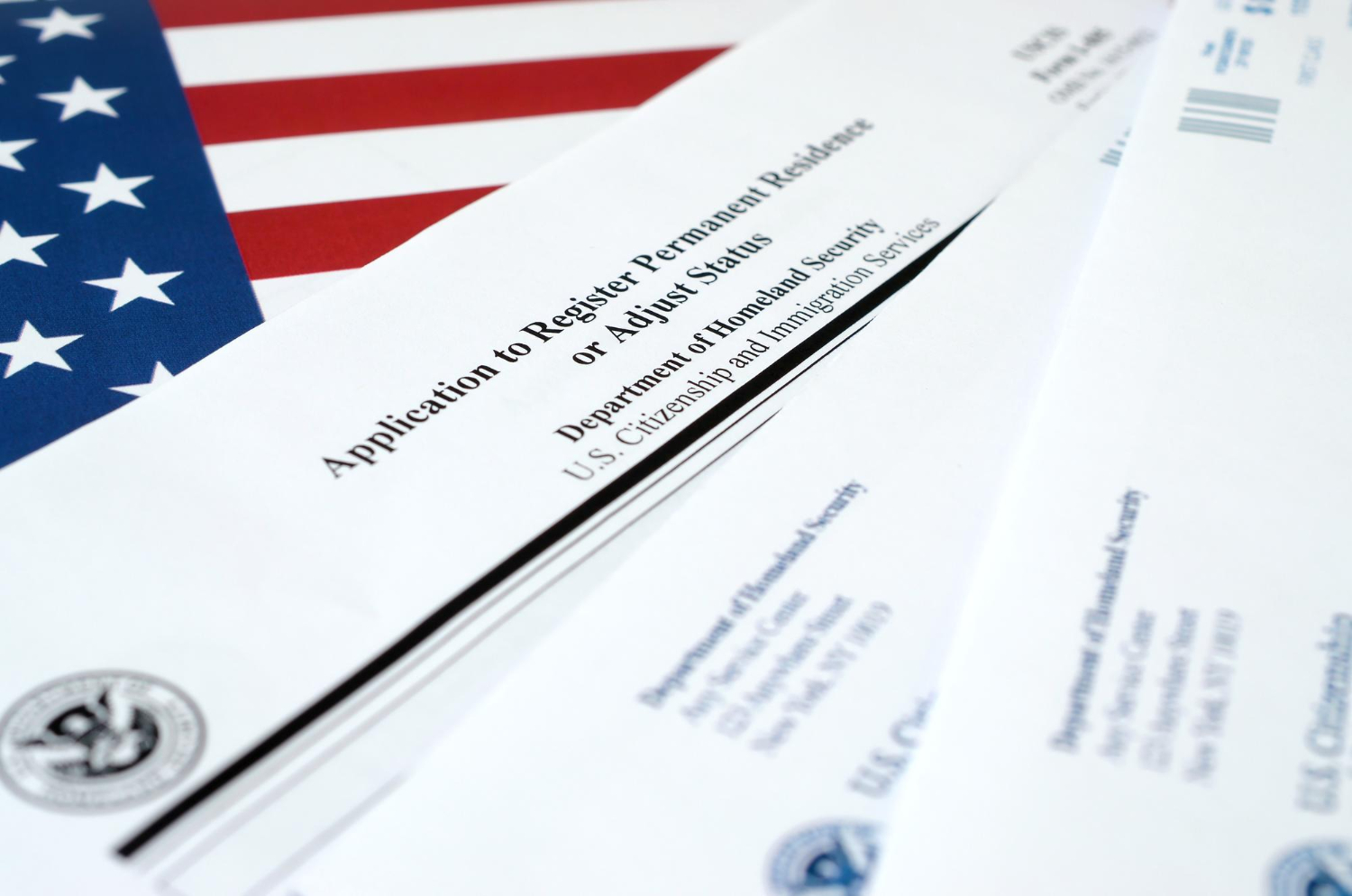
What Is the Public Charge Ground of Inadmissibility?
The public charge ground of inadmissibility bars USCIS from approving a Green Card application if the officer determines the applicant is likely — at any point in the future — to become financially dependent on the U.S. government through means-tested public benefits. It’s a long-standing provision of the Immigration and Nationality Act, but what it covers has shifted significantly with each administration.
The 2022 Biden rule narrowed the analysis considerably — limiting it primarily to cash assistance for income maintenance and long-term institutionalization. The new rule reverses that narrowing and broadens the benefits USCIS can consider. That change takes effect September 18, 2026.
Does This Apply to EB-5 Investors?
Yes. USCIS’s updated guidance explicitly lists Investors — the EB-5 employment-based preference category — among the groups subject to the public charge analysis when filing for adjustment of status. That means an I-485 filed by an EB-5 investor will include a public charge review by the adjudicating officer.
The analysis, however, is not binary. USCIS must consider the totality of the applicant’s circumstances across five statutory factors: age, health, family status, assets and financial resources, and education and skills. No single factor is automatically disqualifying, and no single factor creates automatic approval. The officer is weighing the full picture.
For most EB-5 investors, that full picture works in their favor. An investor who has committed $800,000 or more in documented, lawfully sourced capital — and who has already cleared the source-of-funds analysis required by their immigration attorney to file an I-526E — is presenting exactly the financial profile the public charge factors reward: substantial assets, documented income history, demonstrated financial self-sufficiency.
What Actually Changed Under the New Rule
The substantive change is in which public benefits USCIS will consider — and the cutoff date matters.
For benefits received before September 18, 2026: USCIS will only consider receipt of cash assistance for income maintenance and long-term institutionalization at government expense. This is the same narrow standard that has been in place under the 2022 rule.
For benefits received on or after September 18, 2026: USCIS can consider any and all means-tested public benefits — including housing assistance, food assistance (SNAP), Medicaid, and similar programs — when evaluating your application going forward.
The practical implication: benefits received before September 18 carry limited weight in the analysis. Benefits received after that date — even while your I-485 is pending — are now within USCIS’s scope. This is the provision that matters most for investors and their families who are currently in the middle of the adjustment process.
The Derivative Beneficiary Issue
Where this rule has the most practical relevance for EB-5 families is with derivative beneficiaries — spouses and children included on the investor’s I-485 application. In many cases, a spouse on an F-2 or H-4 visa or a child on F-1 may have received limited public benefits, particularly in the healthcare category, that the investor themselves never touched.
Under the 2022 rule, many of those benefits would have been outside the scope of the analysis. Under the new rule, benefits received on or after September 18, 2026 are reviewable. Each derivative beneficiary’s circumstances are evaluated independently, and the totality-of-circumstances standard means a USCIS officer will weigh those benefits against the financial picture of the entire family unit — but the benefits are on the record.
The answer isn’t necessarily a problem; it may be easily explained in the context of a family with substantial assets and a documented investment. But it needs to be identified, disclosed accurately, and addressed thoughtfully in the application — not discovered during adjudication.
Public Charge Bonds: The Safety Valve
The updated guidance also clarifies the public charge bond process. If a USCIS officer determines that an I-485 applicant is inadmissible solely on public charge grounds, the officer may invite the applicant to post a financial bond — either a cash bond or a surety bond submitted via Form I-945 — as an assurance of future self-sufficiency. If the bond is accepted and properly posted, the application can still be approved.
The bond amount is calculated based on government assistance the applicant may be eligible for over the next five years. Applicants can only submit Form I-945 if USCIS extends an invitation via a Notice of Intent to Deny — it cannot be preemptively filed. For the vast majority of financially capable EB-5 investors, the bond mechanism will never come into play. But it exists, and it’s worth knowing about before a Notice of Intent to Deny becomes the first time you hear of it.
What Changes on September 18, 2026
This guidance takes effect September 18, 2026, and applies to all Forms I-485 postmarked or electronically submitted on or after that date. Applications already pending before that date are not affected by the new guidance. For investors who have already filed their I-485 — or who will file before September 18 — the 2022 standard remains the operative one.
For investors whose I-526E is still pending and who plan to file I-485 once a visa number becomes available, this rule will be in effect at the time of that filing. That doesn’t change the fundamental analysis for a financially qualified investor, but it does make accurate benefit disclosure and documentation more important than it was under the 2022 framework.
Key Takeaways
- EB-5 investors are subject to the public charge ground of inadmissibility when filing Form I-485 to adjust status. This has always been true; the new rule changes what USCIS considers in making that determination.
- The public charge analysis is totality-of-circumstances — five statutory factors including financial resources and assets. The financial profile of a qualified EB-5 investor is generally well-aligned with what USCIS is looking for.
- For benefits received before September 18, 2026: only cash assistance and long-term institutionalization are considered. For benefits received on or after that date: any means-tested benefit is within scope.
- Derivative beneficiaries — spouses and children on the same I-485 — deserve independent review. Benefits one family member received may not be on the investor’s radar but could appear in the application record.
- The public charge bond process exists as a safety valve for applicants whose applications are affected solely by public charge concerns — but it can only be used after USCIS issues an invitation via a Notice of Intent to Deny.
- Applications filed before September 18, 2026 operate under the 2022 standard. Applications filed on or after that date fall under the new guidance.
What to Do Now
For investors already in the U.S. on an H-1B or similar visa who are at or approaching the I-485 stage, the most important step is a straightforward review with your immigration attorney of any public benefits received by you or anyone on your application — particularly any received after September 18, 2026. The goal is accurate disclosure and context, not avoidance. USCIS officers review these determinations case by case, and a well-documented record is the strongest position to be in.
Disclaimer: This update is provided for informational purposes only and does not constitute legal or investment advice. Visa availability is subject to change, and individual circumstances may vary. Prospective investors should consult with qualified immigration counsel and review all offering documents before making any investment decision.